Blog
Analysis of the Mink Market 2025-2026 and Outlook for 2026

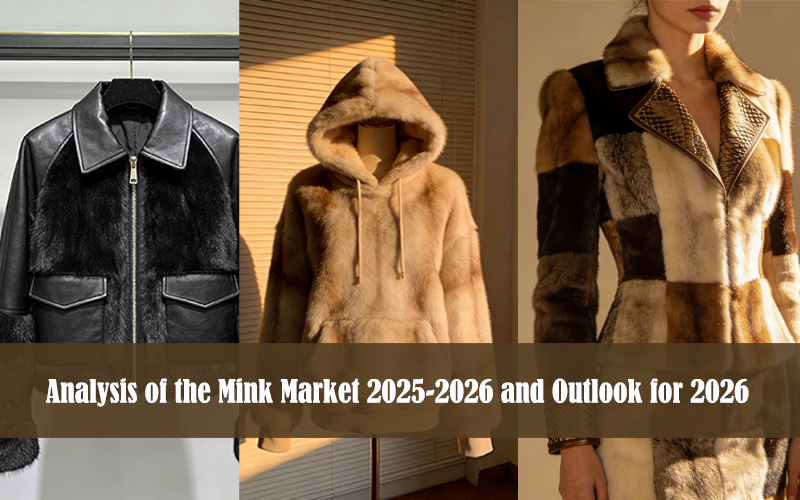
This report focuses on both the supply and demand sides of the mink market, sorts out the market performance from the winter of 2025 to the Spring Festival of 2026, analyzes the mink production capacity pattern in China and the world, and presents a comprehensive outlook on the 2026 market trend, supply volume, private transactions and industry sentiment, providing a reference for industry participants.
- Demand Side: China Market, Booming Garment Sales and Remarkable Achievements in Youth-Oriented Transformation
Since the winter of 2025, the China domestic mink garment consumption market has witnessed an explosive growth with outstanding performance in core trading areas. The consumer groups, product styles and price system have all been optimized, and the enthusiasm of the production side has risen simultaneously, fully confirming the strong resilience of terminal demand.
(1) Double Growth in Terminal Customer Flow and Transaction Volume
As a core trading hub for fur in China, Haining Leather City has seen a significantly better customer flow since the winter of 2025 compared with previous years. During the New Year’s Day of 2026, the customer flow surged by more than 90% year-on-year; the single-day customer flow on weekends before the Spring Festival repeatedly exceeded 20,000 person-times, with a peak of 25,000 person-times. There were long queues at fitting rooms in the shopping mall, active cross-city procurement, and a shortage of parking spaces. The growth in customer flow directly drove the transaction volume up by more than 25% year-on-year, hitting a new high in the same period in recent years.
(2) Stable Prices and Prominent Hit Products
Mink is the most popular category among artificially farmed high-end furs, with generally stable terminal prices and distinct characteristics of hit products. The core hit product this winter is the full mink garment priced at 8,000 RMB per piece, which is in short supply due to its high cost performance. Affected by the price increase conduction from the Russian sable auction on December 19, 2025, merchants in Haining generally raised their quotations and narrowed the bargaining space; despite the fluctuation of upstream raw material prices, benefiting from the improvement of enterprise efficiency and pricing optimization, the terminal price of mink garments keep still. The price stability effectively guaranteed consumer enthusiasm. In addition, the price increase of sables and the expectation of reduced overseas mink supply have further strengthened the stability of mink prices.
(3) Raw Material Price Index Fluctuating at a High Level
In January 2026, the mink skin price in the skins market showed a trend of “rising sharply and then falling back”: driven by the high international raw material costs and market hoarding sentiment in the first half of the month, it climbed to a recent six-month high; in the second half of the month, a technical correction occurred due to profit taking by hoarders, maintaining a high level overall. It is worth noting that the supply of high-quality mink skin is tight, and the market logic has changed from “raw material pricing leading finished product prices” to “finished product sales leading raw material prices”, with terminal consumption becoming the core driver of raw material price fluctuations.
(4) Iterative Upgrading of Consumer Groups and Motivation
The consumer group of mink garments has been completely renewed, with young women aged 25-35 becoming the core main force, breaking the stereotype of “being exclusive to middle-aged and elderly women”. Consumption motivation has shifted from conspicuous and face-saving consumption to self-oriented consumption. Young consumers pay more attention to warmth retention, texture, dressing value and long-term cost performance, and regard mink garments as daily winter wear and a “must-have outfit for the Spring Festival”, balancing practicality and a sense of ritual.
(5) Youth-Oriented and Fashion-Oriented Transformation of Style Design
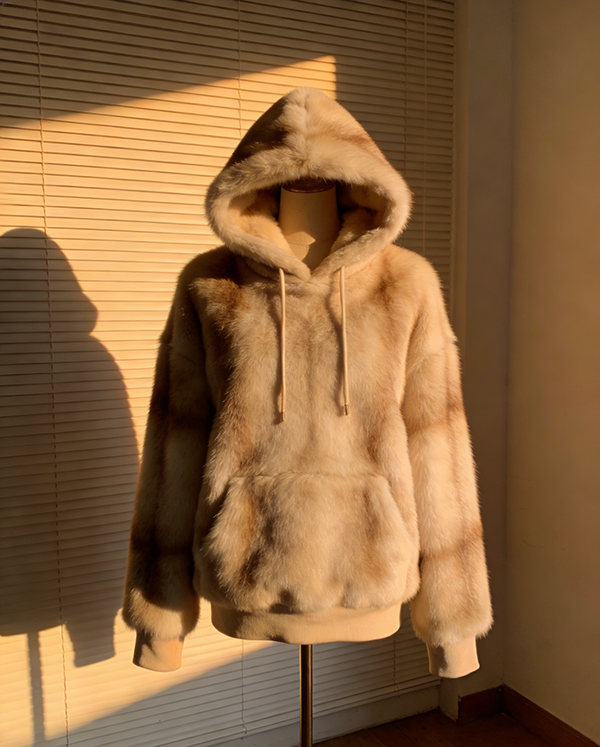
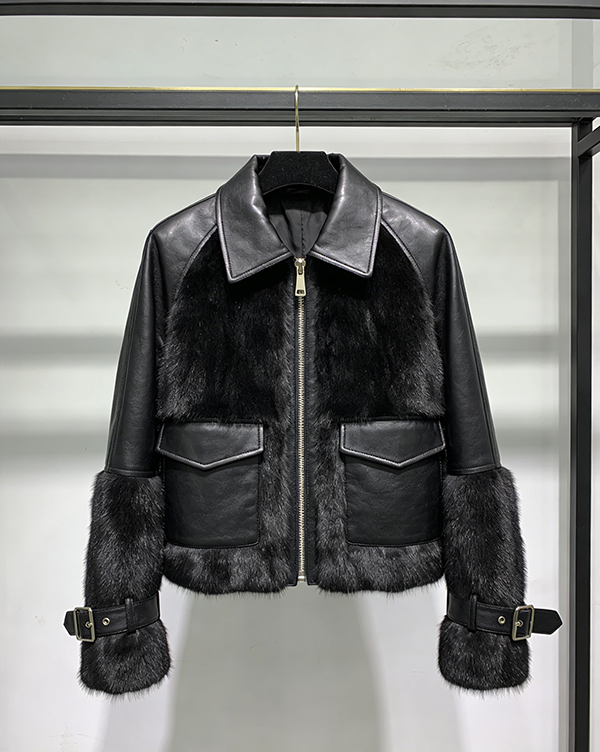
To adapt to the needs of young groups, the styles of mink garments have been fully upgraded, with youthfulness and fashion becoming the mainstream. Designs such as hooded sweatshirt style, motorcycle jacket style, patchwork style and dopamine color matching are widely popular. The styles are more suitable for daily scenarios, getting rid of the heavy and old-fashioned feeling of traditional mink garments, and further enhancing the attraction to young consumers.
(6) Full Orders on the Production Side and Strong Supply-Demand Linkage
The booming terminal consumption has been directly transmitted to the production side. Enterprises in major mink garment producing areas such as Haining and Yuyao have their orders scheduled until April 2026, with the operating rate close to 100% and the production rhythm accelerating continuously. The enthusiasm of the production side forms a strong linkage with terminal demand, further confirming the high prosperity of the mink garment market and the continuous improvement of the industry’s supply-demand matching degree.
- Supply Side: Recovery and Quality Improvement of China’s Production Capacity, Differentiated Adjustment of the Global Pattern
The current mink supply market presents the characteristics of “China’s recovery and quality improvement, and global pattern differentiation”: as a core supplying country, China’s production capacity is continuously recovering with quality upgrading; major producing areas such as Europe, Russia and the United States show obvious differences in development trends due to policies and markets, jointly forming the global mink production capacity pattern.
(1) Analysis of China’s Mink Production Capacity
- 2025 Production Capacity Performance: Sustained Recovery and Regional Concentration
In 2025, China’s mink industry continued the recovery trend of 2024, with the skinning quantity increasing for the second consecutive year, reaching 4.87 million pieces for the whole year, a year-on-year increase of 15.36%. This marks that the industry has gradually got rid of the long-term decline trend from 2010 to 2024 and entered a stage of steady recovery, with the core driving force being the pull of terminal consumer demand.
The regional distribution is highly concentrated. Shandong Province, Liaoning Province and Heilongjiang Province are the core breeding provinces, accounting for 96% of the national total skinning quantity together. Among them, Shandong accounts for 48.32%, Liaoning 40.88% and Heilongjiang 6.78%, while the remaining provinces account for only 4.02% in total. The top 10 cities in terms of skinning quantity (Dalian, Weifang, etc.) are all concentrated in the three core provinces, with a significant industrial agglomeration effect and forming large-scale breeding advantages relying on a complete industrial chain.
- 2026 Production Capacity Forecast: Quality Upgrading as the Main Line and Continuous Improvement of Concentration
According to the 2026 Development Analysis Report on China’s Fur-Bearing Animal Breeding Industry, the core logic of China’s mink breeding in 2026 is the upgrading of breeding stock quality. The industry is undergoing an in-depth transformation from “quantity expansion” to “quality improvement”, and at the same time, the industrial concentration is continuously improved, with the large-scale and intensive pattern taking shape gradually.
Upgrading of breeding stock quality is the core main line. Driven by the high demand and high profit margin for velvet-grade mink skin in the terminal market, domestic leading breeding enterprises and large-scale farms have increased investment in breeding stock optimization, adopting a dual-track strategy of “introduction + independent improvement”: on the one hand, leveraging the expansion of the high-quality velvet mink breeding stock imported from Denmark, Finland and other countries before the Covid , focusing on populations with high fur density, high luster; on the other hand, domestic core mink breeding bases are accelerating variety improvement, cultivating localized high-quality breeding stock that adapts to the domestic environment and has stable quality, reducing dependence on imported breeding stock.
Velvet quality has become the benchmark for upgrading. In 2026, the proportion of domestic velvet-quality mink will stabilize at 20%-30%, an increase of 5-8 percentage points compared with 2025. Among them, the output proportion of velvet-quality mink in leading farms has exceeded 40%, becoming the industry benchmark; small and medium-sized farms are gradually improving the output rate of high-quality skin through cooperation with leading farms and introduction of standardized schemes, and the overall quality of the industry’s skin is improving step by step.
The product category structure is optimized simultaneously. The color layout of China mink breeding in 2026 is estimated as the follows: white accounts for 20%, silver blue 35% and brown 40%,others 5%. Among them, driven by the strong terminal demand in 2025, the breeding proportion of brown mink has increased significantly. The breeding side accurately matches the market demand and avoids the risk of supply-demand imbalance.
Standardization of breeding technology provides support. In 2026, the industry will promote a full-process standardized system of “breeding stock selection – feeding management – disease prevention and control – primary skin processing”, focusing on improving the litter survival rate, young mink survival rate and skin grade rate. At the same time, the concepts of environmental protection and welfare breeding are being implemented, and the investment in the transformation of standardized facilities is increasing. Although it pushes up the unit cost, it significantly improves the skin quality, strengthens the “high quality for high price” mechanism, and forms a virtuous circle of quality upgrading.
Industrial concentration is continuously improved. The industry reshuffle is accelerating, and traditional individual farmers are withdrawing rapidly. In 2026, the proportion of large-scale farms (with an annual output of more than 50,000 minks) will exceed 60%, an increase of 10 percentage points compared with 2025. Due to the lack of breeding stock, technology and bargaining power, small and medium-sized individual farmers are gradually withdrawing or transforming into a “cooperative model”, realizing integrated operation relying on leading enterprises.
The advantages of core producing areas are prominent. The proportion of the three provinces of Shandong, Liaoning and Heilongjiang remains stable at more than 95%. Relying on a complete industrial chain supporting system (breeding stock, feed, primary processing, logistics), they form cost advantages and synergy effects. All leading enterprises are laid out here, further consolidating the position of core producing areas.
Idle production capacity is revitalized efficiently. Against the background of industry recovery, most old and idle mink farms in northern China have been fully leased. The lessees are mainly leading enterprises and standardized companies established by external capital. Leading enterprises take the lead in resource integration and promote the orderly expansion of production capacity.
External capital is pouring in at an accelerated pace. As a rare profitable niche in the agricultural field, mink breeding has attracted a large amount of external capital in 2026, focusing on the construction of large-scale bases, the breeding of high-quality breeding stock and the layout of the entire industrial chain. This promotes the transformation of the industry from scattered breeding to a modern and intensive model, strengthens the competitiveness of leading enterprises, and highlights the Matthew effect.
(2) Analysis of Global Mink Production Capacity (2025 Performance and 2026 Outlook)
The global mink production capacity shows obvious differentiation: Europe is continuing to shrink due to animal welfare legislation, Russia is growing steadily, and the United States is continuing to contract. The differentiated trend shapes the global production capacity pattern.
- European Breeding: High Concentration and Shrinking Total Volume
In 2025, European mink breeding presented a pattern of “high concentration and shrinking total volume”. Affected by animal welfare legislation and market pressure, production capacity is gathering in a few countries. Core EU countries contribute more than 95% of Europe’s production capacity, with a total output of about 6 million pieces in 2025. As the largest mink producing country in the EU, Poland signed an 8-year breeding ban in 2025, with the output still at a high level in that year and will decrease year by year in the follow-up.
In 2026, the EU’s mink skin output is expected to be 5-6 million pieces, a year-on-year decrease of 10%-15%, continuing the annual decline trend. Poland’s output is expected to drop slightly to 2-2.5 million pieces, and Greece’s output is basically stable; the EU’s animal welfare policies are advancing continuously, breeding costs are rising, profits are narrowing, small and medium-sized farms are withdrawing at an accelerated pace, and the concentration is further improved. (Note: This is an estimated data and will be adjusted according to accurate information)
- Russian Breeding: Steady Growth and Regional Concentration
In 2025, Russian mink breeding grew steadily, becoming a growth pole against the background of European recession, with an annual output of about 1-1.5 million pieces. The core driving forces are government agricultural support and demand from Asian markets such as China. The breeding varieties are mainly brown and silver blue that adapt to the local climate, and high-quality Nordic breeding stock is introduced to improve quality at the same time. The products are mainly exported to China and Central Asia.
In 2026, the Russian Ministry of Agriculture expects the output to reach 1.5 million pieces with a stable growth rate. The supporting factors include: the expansion of breeding bases in the Far East, the increase in capital and technology investment, the popularization of breeding stock improvement and standardized breeding, which promote the double improvement of litter survival rate and high-quality skin rate.
- American Breeding: Continuous Contraction and Oligopoly
In 2025, American mink breeding continued to contract, with the scale dropping to a historical low. According to the data of the United States Department of Agriculture (USDA), the output in 2024 was 771,200 pieces (a year-on-year decrease of 19%), and in 2025, affected by the decline in the stock of breeding female minks, the output was about 710,000 pieces (a year-on-year decrease of 7.9%). The regional concentration is extremely high: Wisconsin contributes 62% of the output, Utah accounts for 13%, and the top two states account for more than 75% in total. In terms of varieties, black minks account for 60% of breeding female minks. The total output value of skin in 2025 was about 26 million US dollars, with an average unit price of 36.6 US dollars per piece. The price rose slightly but failed to reverse the shrinking trend.
In 2026, the US output is expected to be 650,000-680,000 pieces, a year-on-year decrease of 4%-8%, with the contraction speed slowing down but the trend remaining unchanged. It is mainly affected by the decline in the stock of breeding female minks in 2025 (a year-on-year decrease of 7%); large-scale farms dominate the market, and small and medium-sized individual farmers continue to withdraw; the domestic consumption market is shrinking and dependent on exports, animal welfare regulations are becoming stricter, and environmental protection costs are rising. The industry maintains a “small but sophisticated” pattern, focusing on characteristic varieties for high-end customization.
III. Outlook for the Mink Market in 2026
Combined with the current supply and demand pattern, global production capacity changes and industry trends, the mink market will continue its high prosperity in 2026, with the supply volume showing structural characteristics, active private transactions, and the overall industry sentiment being optimistic while remaining rational and prudent.
(1) Supply Volume Analysis: Auctions as the Main Force and Stable Total Volume
In 2026, the global supply of raw mink skin mainly relies on the three core auctions of SAGA, AME and KPHG, with clear sessions, dates and expected sales volume. The overall supply is stable and can better match the terminal demand, as detailed below:
| Auction House | 2026 Auction Sessions | Sales Date | Expected Total Sales Volume (Million) | Notes |
| SAGA Furs | 3 sessions | Mar 27–31, Jun 27–Jul 2, Sep 15–21 | About 9M–10M | 3M pieces per session |
| AME | 1 session | May 26–28 | 1.1M | one session |
| KPHG | 1 session | Jul 6–8 (Poznan, Poland) | 1.5-2M | One Session |
Overall, the three major auctions are expected to sell 11.6-13.1 million pieces in 2026. Combined with the production capacity of global producing areas, the total supply of raw skin for the whole year is stable. The tight supply situation of high-quality mink skin may continue, supporting the price of high-quality skin; at the same time, the global inventory is gradually cleared, further strengthening the supply stability.
(2) Summary of Private Transaction Dynamics in 2026
In 2026, private transactions of raw mink skin will remain active, serving as an important supplement to auction supply, with the core characteristics of “prioritizing high quality, accurate matching and flexible pricing”. Among them, high-quality velvet mink skin and rare colored skin are the core of transactions. Breeding enterprises and processing enterprises connect directly, reducing intermediate links and balancing the interests of both parties. In terms of price, affected by auction conduction, the price of private transactions is linked with auctions, with the price of high-quality skin rising steadily and the price of ordinary skin remaining stable.
(3) Industry Sentiment towards 2026
In 2026, all participants in the mink market (breeders, processors, distributors, auction houses) are generally optimistic while remaining rational and prudent, forming a consensus around industry prosperity, price trend and quality competition, with slight differences in the sentiment of different participants.
Breeding enterprises: Generally optimistic with three core supports: first, the continuity of the booming terminal consumption in 2025, expecting strong demand to remain in 2026; second, high profit margins brought by quality upgrading, with strong demand for velvet skin; third, increased confidence from capital injection and concentration improvement. At the same time, they remain rational, worrying about feed cost fluctuations, insufficient high-quality breeding stock and global production capacity adjustment, and focusing on quality improvement rather than blind expansion.
Processing enterprises and distributors: Active layout and optimistic sentiment. The full orders in 2025 have laid a solid foundation for confidence. Processing enterprises plan production capacity in advance, connect with raw material supply, and focus on laying out youth-oriented and fashion-oriented products; distributors are optimistic about price stability and the appreciation space of high-quality garments, actively stock up and expand online and offline channels. Some processing enterprises also guard against raw material price fluctuations and reasonably control inventory to avoid risks.
Auction houses: Steady adjustment and cautious optimism. In response to the global production capacity differentiation, they optimize auction plans (such as KPHG adjusting to a single session in Poland), focus on high-quality raw skin and improve transaction efficiency. It is expected that the transaction rate and price of high-quality skin will rise steadily, and the transaction of ordinary skin will remain stable. At the same time, they strengthen global connection and improve services to ensure market stability.
Overall, the optimistic sentiment dominates the mink market in 2026, with the core logic being strong terminal demand, a virtuous circle of quality upgrading and tight supply of high-quality raw materials; all participants guard against potential risks and make rational layouts. It is expected that the market will maintain a high prosperity and achieve a healthy development of “quality improvement, price stability and supply-demand balance”.